In this article

What to know
- After-meal walking improved short-term glucose responses in small defined populations.
- Walking timing, total activity and breaks in prolonged sitting are related but different comparisons.
- These trials do not establish a long-term weight-loss forecast or require a tracking purchase.
A useful walk does not need a weight-loss forecast
A walk after dinner can be a manageable way to put movement into a normal week. Small randomized studies support benefits for glucose after meals, but they do not establish that a particular ten-minute walking schedule produces a predictable amount of weight loss. [1] [2] That distinction makes the evidence more useful, not less encouraging. It lets a person value an achievable habit without judging it only against the bathroom scale. The question is what the study measured and over what period. A glucose response over hours is a real outcome; it is simply a different outcome from body weight maintained over months.
One trial compared the timing of similar advice
Reynolds and colleagues studied 41 adults with type 2 diabetes in a randomized crossover trial. Participants received advice to walk for 30 minutes daily or for ten minutes after each main meal, with each intervention lasting two weeks. [1] Crossover means the same participants experienced both approaches in separate periods, helping compare responses within people. It does not make a short experiment into a long-term weight trial. Both instructions also described walking, so this was not a comparison of being active with doing nothing. That is an important boundary when a headline describes an after-meal walk as though timing alone accounts for every benefit of movement.
Read the glucose number in its own units
The after-meal approach produced a lower incremental glucose area under the curve: the ratio of geometric means was 0.88, with a 95% confidence interval of 0.78 to 0.99. [1] In ordinary language, that is about a 12% lower measured post-meal glucose response under the comparison used. It does not mean HbA1c fell by 12%, blood glucose was always 12% lower or participants lost 12% of their weight. Area under the curve combines the size and duration of the response across a measurement period. Naming that outcome prevents an appealing percentage from drifting into a much larger claim than the experiment tested.
The evening result needs its context
In the same study, the relative improvement was larger after the evening meal, when participants consumed the most carbohydrate and sedentary behavior was highest. [1] That makes the setting relevant. It does not establish that everyone should rearrange meals or that an evening walk always outperforms movement at another time. A person’s main meal, working hours and opportunities to move may differ. The practical lesson is to notice where a short walk could fit comfortably, rather than assume a universal clock time carries the benefit. The research compares advice in a particular group; it does not assign a perfect daily schedule to everyone reading about it.
An older-adult experiment was even more controlled
DiPietro and colleagues enrolled ten inactive adults aged at least 60 with elevated fasting glucose. They compared three 15-minute post-meal walks with single 45-minute walking sessions in randomly ordered protocols, each involving a 48-hour laboratory stay. Both post-meal walking and sustained morning walking improved average 24-hour glucose relative to control days; the post-meal schedule had the stronger post-dinner result. [2] Equal total walking time makes that timing question interesting. The very small sample and controlled setting also matter. A study where food, timing and treadmill activity can be supervised answers a different question from whether a busy household can maintain the same pattern all year.
Breaking sitting is related, but not identical
Peddie and colleagues randomized 70 healthy, normal-weight adults to different orders of three nine-hour conditions: prolonged sitting, a continuous 30-minute walk followed by sitting, or brief walks of one minute 40 seconds every half hour. Regular breaks lowered the glucose and insulin responses compared with the other conditions. [3] This supports a broader question about how movement is distributed across a sedentary day. It is not another trial of ten-minute after-dinner walking in diabetes. Keeping those distinctions visible avoids treating every study of activity breaks as a direct replication. The intervention, people and measured response differ even when the practical idea feels similar.
For a longer follow-up question about building walking into daily life, read our PACE-UP walking-support analysis.
The studies do not make longer activity unnecessary
A better short-term glucose response with frequent breaks does not mean a longer walk or another form of exercise has no value. The experiments selected particular metabolic outcomes and comparison conditions. [1] [2] [3] A person may also care about fitness, strength, mobility, enjoyment or time outdoors. Those goals should not disappear because a glucose chart favors one distribution of walking. The reasonable reading is that total minutes and the pattern of prolonged sitting can be different questions. A short after-meal habit can sit beside other activity rather than become a reason to discard it. One useful result does not need to win every possible comparison to matter.
Why the scale may tell a different story
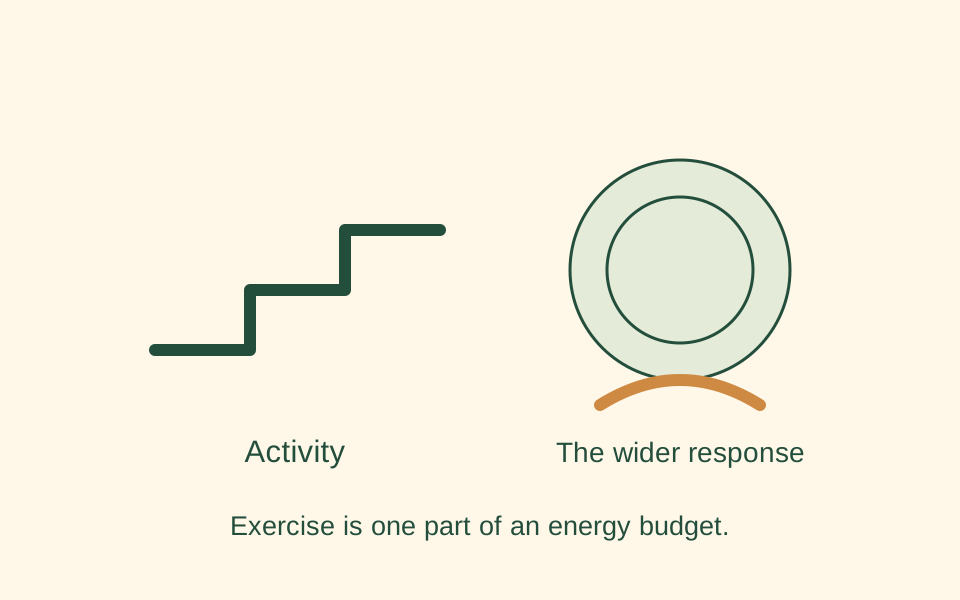
None of these short experiments establishes a lasting weight-loss advantage from the proposed timing pattern. [1] [2] [3] That does not mean the habit is pointless if weight stays stable. It means a movement plan should not be sold with an invented annual weight forecast based on a glucose graph. When weight is part of the goal, meals, the wider activity routine and ongoing support still need their own consideration. A person may find a ten-minute walk easier to repeat than a single longer session, while someone else may prefer one comfortable outing. The studies do not authorize blaming either person for failing to reproduce a particular laboratory result.
For why activity and the scale may move differently, see our exercise and weight-compensation guide.
Make the habit fit the person
If the idea appeals, discuss an appropriate activity plan with the clinician when diabetes medication, low-glucose risk, pain or limited mobility affects what is comfortable. The research does not justify changing medicine in response to a walking routine. Nor does it require buying a glucose monitor, step counter or premium exercise subscription. A practical starting conversation can focus on the time and setting that feel workable, and on what the clinician would want monitored. The best support may be help adapting movement rather than another target in an app. The point is to reduce a barrier to useful activity, not create another daily task that becomes difficult to sustain.
Judge the right kind of progress
A useful review of an after-meal walking habit can ask whether the routine is comfortable, fits around meals and adds movement to an otherwise seated period. If clinical glucose outcomes are being monitored, interpret those with the responsible clinician and alongside the rest of the plan. Keep the weight question separate until it has evidence over an appropriate period. That gives the habit a fair chance to be valuable without assigning it a result the studies never promised. A short walk can belong in a fuller plan for health even when the scale changes slowly, and it does not have to become a new product purchase to count.
If the obstacle is choosing suitable support, use our support-type comparison.
Sources
- Reynolds et al. randomized crossover trial of walking advice and meal timing, Diabetologia 2016 (opens in a new tab)
- DiPietro et al. randomized postmeal walking protocols in older adults, Diabetes Care 2013 (opens in a new tab)
- Peddie et al. randomized crossover trial of prolonged sitting and activity breaks, AJCN 2013 (opens in a new tab)
Research describes groups and specific study conditions. Your medical history, symptoms and treatment decisions require advice from your own qualified clinician.