In this article
What to know
- CHOICE did not establish significant differences in mean weight change.
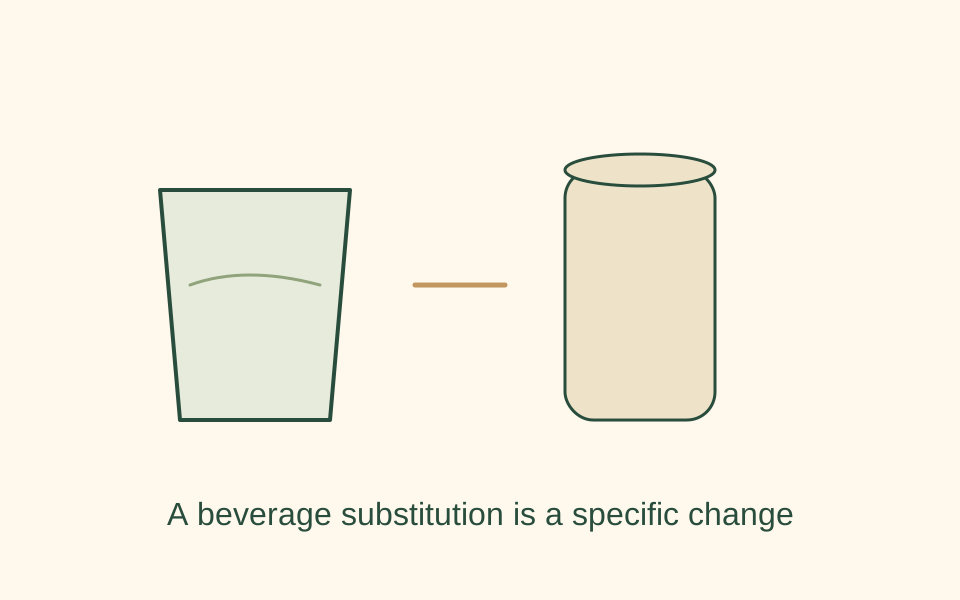
- Beverage replacement differs from adding water before meals.
- Child and adolescent trials cannot be treated as adult treatment results.
One change can be reasonable without being a guaranteed fix
Replacing a regularly consumed caloric drink is a practical change to consider when it fits your preferences. CHOICE tested that approach rather than assuming the calories removed would translate neatly into a predicted weight loss. Its average weight-loss comparison did not show significant differences between groups. [1] That is worth saying early, because the simplicity of a habit does not make its effect certain or identical for everyone. A useful change may be easier to maintain than a complete diet overhaul, but its value should not depend on a promise that a particular drink swap will produce a particular number on the scale.
The trial supplied drinks and some support
CHOICE randomized 318 adults with overweight or obesity to replace caloric beverages with water, replace them with diet beverages or make dietary changes of their choice in an attention-control group. The replacement target was at least two servings totaling at least 200 kcal daily, with beverages supplied and monthly group support over six months. [1] Those details matter. The trial was not simply an advertisement telling participants to drink more water, nor a test of adding water without replacing another drink. Someone choosing a practical habit can use the principle, while recognizing that free beverages and organized contact are more support than an ordinary purchase provides.
The corrected average comparison is modest
At six months, mean weight changes were about minus 2.5% in the diet-beverage group, minus 2.03% with water and minus 1.76% in the attention-control group, with no significant between-group difference. The published abstract explicitly marks that comparison as corrected. [1] The study also reported a favorable combined analysis for reaching at least five percent weight loss, which is a different outcome from average weight change. Neither result should erase the other. A threshold analysis can be interesting without proving the average advantage often implied by a broad headline. Keep the outcome and comparison visible rather than select only the statistic that makes the habit look most powerful.
The adolescent trial shows why follow-up matters
A separate study randomized 224 adolescents with overweight or obesity who regularly drank sugar-sweetened beverages. The intervention supplied noncaloric drinks at home for one year, followed by another year without the intervention. At one year, weight change favored the intervention by 1.9 kg, but the primary two-year BMI difference was not significant. [2] That is not an adult weight-loss result and should not be promoted as one. It does illustrate a practical uncertainty: an effect while supplies and support are active may not persist unchanged once they stop. The ongoing environment matters, including which drinks are available and whether the replacement is something the person willingly keeps choosing.
Children’s results answer a different question again
An eighteen-month trial in 641 mostly normal-weight children provided 250 mL daily of either a sugar-free drink or a similar drink containing 104 kcal. Weight gain averaged 6.35 kg versus 7.37 kg, respectively, in the imputed analysis; adverse events were described as minor. About 26% stopped consuming the study drinks. [3] This was a study of weight gain during growth, not weight loss in adults. Its missing-data sensitivity also mattered: an analysis combining measured results from completers and some discontinuers gave a statistically uncertain BMI-z-score difference. The finding should therefore retain its population and analysis rather than become a universal claim that a sugar-free product causes a fixed amount of weight change.
A beverage swap is not a complete health verdict
These experiments address defined drink replacements and weight-related outcomes, not every long-term question about sweeteners or every reason someone chooses a beverage. A diet drink can be considered as a practical replacement without declaring it the best option for everyone. Water may suit one person, while another finds a different unsweetened or noncaloric option easier to maintain. The relevant question is what is being replaced and what happens to the rest of the routine. Do not turn a small possible change into a reason to judge an occasional drink or assume that one product determines overall diet quality. A habit is more useful when it stays proportionate to the problem.
Make the replacement easy to repeat
If you want to try this kind of change, start with a drink you consume often and choose a replacement you enjoy enough to keep available. Consider cost, storage, access at work and what the rest of the household drinks. An expensive specialty beverage is not required by the evidence. If the replacement leaves you dissatisfied or simply shifts the same purchase elsewhere, the routine may need adapting. A food-planning or tracking tool can help notice a pattern, but it does not need to turn every drink into a score. The useful aim is a manageable choice repeated often enough to judge, rather than a perfect record maintained briefly.
For a meal-planning tool to evaluate on its actual tasks, see our Eat This Much review.
Keep the purchasing claim smaller than the evidence
CHOICE supports investigating a simple, supported substitution while being honest that mean weight differences were not significant. The related trials add age-specific evidence and show the importance of adherence and duration; they do not validate every beverage marketed for weight loss. If comparing programs, ask whether their advice is practical, affordable and adaptable, rather than whether they sell a special drink. Someone needing individual nutrition guidance may benefit from a dietitian conversation about the whole pattern. The habit can remain optional and useful without becoming a guarantee, and a modest result should not be treated as a personal failure to follow a supposedly effortless solution.
For a distinct intervention rather than beverage replacement, read water-before-meals evidence.
Sources
Research describes groups and specific study conditions. Your medical history, symptoms and treatment decisions require advice from your own qualified clinician.