In this article
What to know
- The lunch result included the energy in the soup.
- Soup form did not significantly alter that experiment’s result.
- Long-term evidence tested a broader dietary pattern and support.
The appeal is a more satisfying meal, not a trick
Soup can be a useful part of a meal that feels substantial without concentrating as much energy into a small volume. The important evidence distinction is between what happens at one controlled lunch and what happens across months of ordinary eating. A laboratory experiment found lower total lunch intake after low-energy-density vegetable soup, including the energy in the soup itself. [1] That is more informative than saying participants simply ate less of the main course. It still does not establish that adding any soup to every meal produces a predictable weight change or works the same way for every person.
The lunch experiment compared several forms
Sixty normal-weight men and women attended laboratory lunches once a week for five weeks. They received one of four vegetable-soup formats or no preload, then ate a test meal fifteen minutes after the soup was served. Total meal energy intake was about 20% lower with soup, an average difference of 134 kcal, and soup form did not significantly change the result. [1] The study controlled what was served and when. That makes the immediate comparison clearer, but it differs from choosing a restaurant starter, assembling lunch during work or deciding whether to eat again later in the afternoon.
The total includes the first course
A first course can reduce the amount eaten afterward simply because it supplies food itself. The useful question is whether the combined meal changes, which this experiment measured. [1] That distinction should be preserved when a diet tip becomes a headline. A smaller entrée alone does not prove a lower-energy lunch if the starter adds more than it displaces. Nor does the result apply automatically to rich cream soups, large restaurant portions or a different meal. The paper tested defined low-energy-density vegetable soups, rather than treating every food sold under the same menu heading as a single intervention.
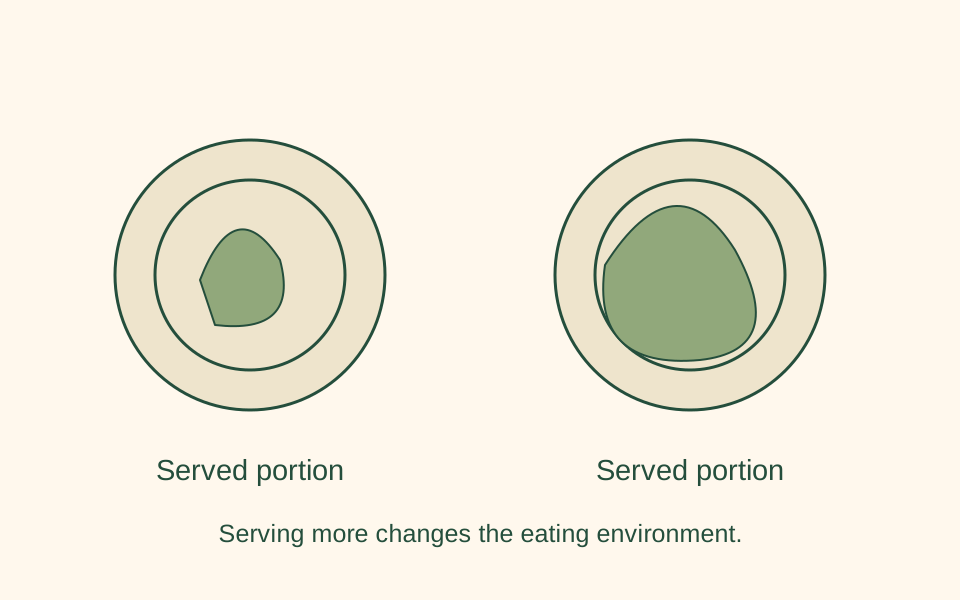
The amount served can also change the result; our Portion size and total meal intake article explains the related evidence.
A separate satiety experiment adds a different perspective
Another within-person study compared soup with other forms of food in 31 adults and assessed appetite and intake. [2] This type of experiment can help researchers examine how the form of food influences fullness. It cannot decide how a person will eat over a whole year or establish that a particular commercial soup is a treatment. Short-term appetite ratings and measured intake are related but distinct outcomes. A food may feel more filling without producing a lasting daily energy difference, and a daily difference may be offset by later eating. Keep those possibilities open rather than turning one meal observation into an annual prediction.
The longer trial tested a whole dietary approach
A yearlong randomized trial assigned 97 women with obesity to reduced-fat advice or reduced-fat advice plus more water-rich foods, especially fruit and vegetables. Among 71 completers, weight reduction was 7.9 kg versus 6.4 kg, with lower reported hunger in the water-rich-food group; analysis of all randomized participants also showed different weight-loss patterns. [3] That was not a soup-only experiment. It supports interest in a broader eating approach with counseling, while leaving the contribution of one food uncertain. The completer figures also should not be presented as if every participant who enrolled achieved those amounts.
Do not multiply one lunch into a yearly prediction
It is tempting to multiply a laboratory meal difference by every day of a year and convert that number into an expected weight change. That calculation would assume the same food is eaten, the same difference occurs every time and later intake and activity never adjust. The experiment did not establish those conditions. A more useful question is whether a meal pattern helps you feel satisfied and makes the next few hours easier to manage. If it does, that is a practical reason to keep it. If it does not, the study does not turn the food into an obligation or imply that you have used it incorrectly.
A useful lunch still needs protein, preference and practicality
For an ordinary week, the question is whether a vegetable soup or another water-rich food makes a meal easier to enjoy and repeat. It should not become an obligation to dilute every meal or to ignore adequate nutrition. Consider the rest of the food, your appetite and any clinical needs. A filling starter that you dislike or cannot conveniently store is unlikely to be a useful habit. The evidence gives a reason to experiment with a satisfying meal pattern, not a requirement to buy a special product or calculate every spoonful before eating.
Choose food support for the actual barrier
If cooking time is the problem, a prepared-food service may be worth comparing; if you want individual guidance around hunger or medical restrictions, a dietitian may be more relevant. Neither service can promise to reproduce a laboratory intake difference. Judge the practical offer on its food, flexibility when plans change, complete delivered cost and the support you will actually use. The useful lesson from energy-density research is that the structure of a meal can matter alongside restraint and portion targets. A plan should help you eat comfortably during a normal day, while remaining honest about the distance between one controlled lunch and a sustainable pattern over months.
If you are comparing support services, see our Factor review.
Sources
Research describes groups and specific study conditions. Your medical history, symptoms and treatment decisions require advice from your own qualified clinician.